
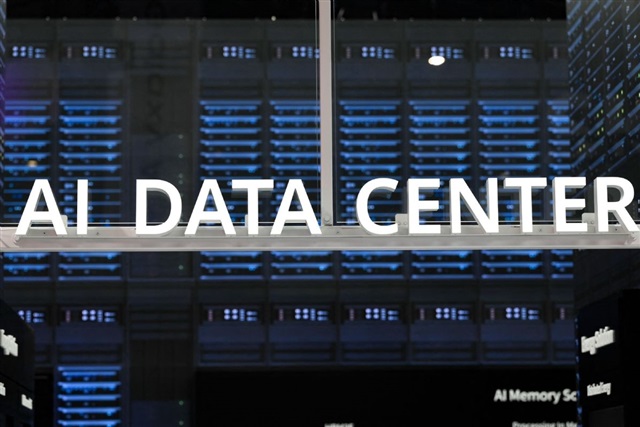
The growth of AI data centers is expected to drive surging demand for Kondensatoren used in servers, with the Japan Electronics and Information Technology Industries Association (JEITA) predicting in its latest report a fourfold increase in demand by 2029 compared to 2023 levels.
According to Nikkei, JEITA predicts that within the next three years, there will be more than 1,000 data centers with power requirements exceeding 10MW. Moreover, computing capacity in 2030 for processing AI and other data will reach 500 times the level seen in 2023.
The massive power consumption in data centers has driven a surge in demand for high-capacity multilayer ceramic Kondensatoren (MLCC). As a result, MLCC makers have seen rising profits from increased demand.
As an example, from April to December 2024, the Japanese component maker Murata saw Umsatz increase by 7% year-over-year, while operating profit also grew by 9% year-over-year, primarily driven by heightened demand for MLCCs and other Bauelemente for data centers offering generative AI services.
Furthermore, Murata president Norio Nakajima expects AI server-related Umsatz to double in fiscal year 2025 (April 2024–March 2025), since AI servers use 5–10 times more MLCCs than communications servers, and at higher unit prices as well.
In addition, analysts at Nomura Securities point to a growth trend for MLCCs due to the proliferation of AI. Price drops for MLCCs and other elektronische Bauelemente have slowed, with some Bauelemente even showing signs of tight supply, suggesting increased demand for passive Bauelemente driven by AI.
According to JEITA, Kondensatoren accounted for 34% of the total shipment value of elektronische Bauelemente sold by Japanese Hersteller in 2024. Yet the demand for MLCCs in AI data centers has only just begun: even though AI servers only accounted for 5% of Murata's annual Umsatz in 2024, this was already roughly triple the amount seen in 2023. Since the data center and AI server segment is expected to see the strongest growth within the next three years, Murata is working to develop smaller products capable of handling higher currents to meet the demand for AI servers.


Abonnieren für regelmäßige Marktupdates. Bleiben Sie auf dem neuesten Stand der Branchentrends, indem Sie unseren Newsletter abonnieren. Unser Newsletter ist Ihr Zugang zu erstklassiger Marktexpertise.
Following a record-setting year for the Halbleiterindustrie, the start of the new year has continued the momentum, as semiconductor Umsatz grew 27% in 1Q26 from 4Q25 to reach US$319bn, according t


