
“Geopolitical shifts are fundamentally changing the semiconductor game,” says IDC’s Helen Chiang, “while immediate impacts might be subtle, long-term strategies are focusing more on Lieferkette self-reliance, security, and control. The industry operation will move from global collaborations to multi-regional competitions,”
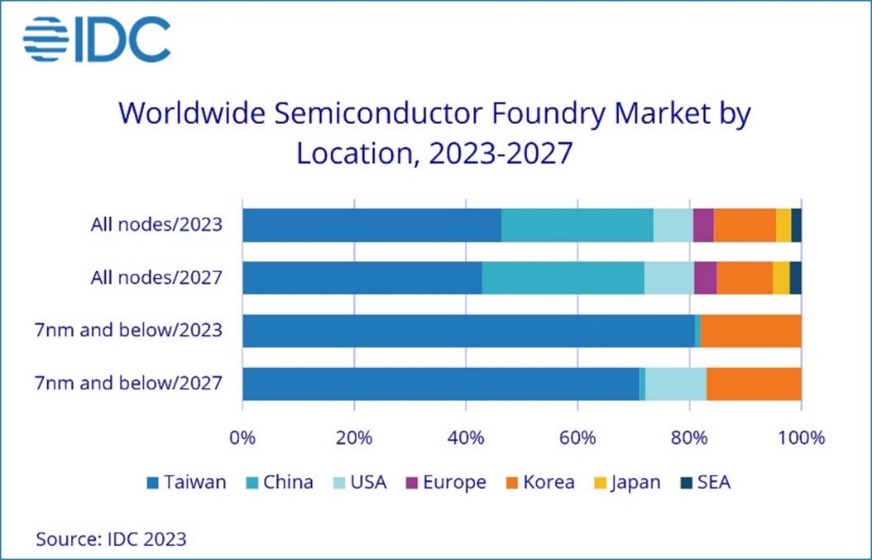
China’s rapid development of mature processes means its proportion of the foundry market will continue to increase, reaching 29% in 2027, an increase of 2% from 2023.
Taiwan’s proportion of the foundry market will fall from 46% in 2023 to 43% in 2027.
The US will make gains in advanced processes, and its share of the foundry market for 7nm and below is expected to reach 11% in 2027.
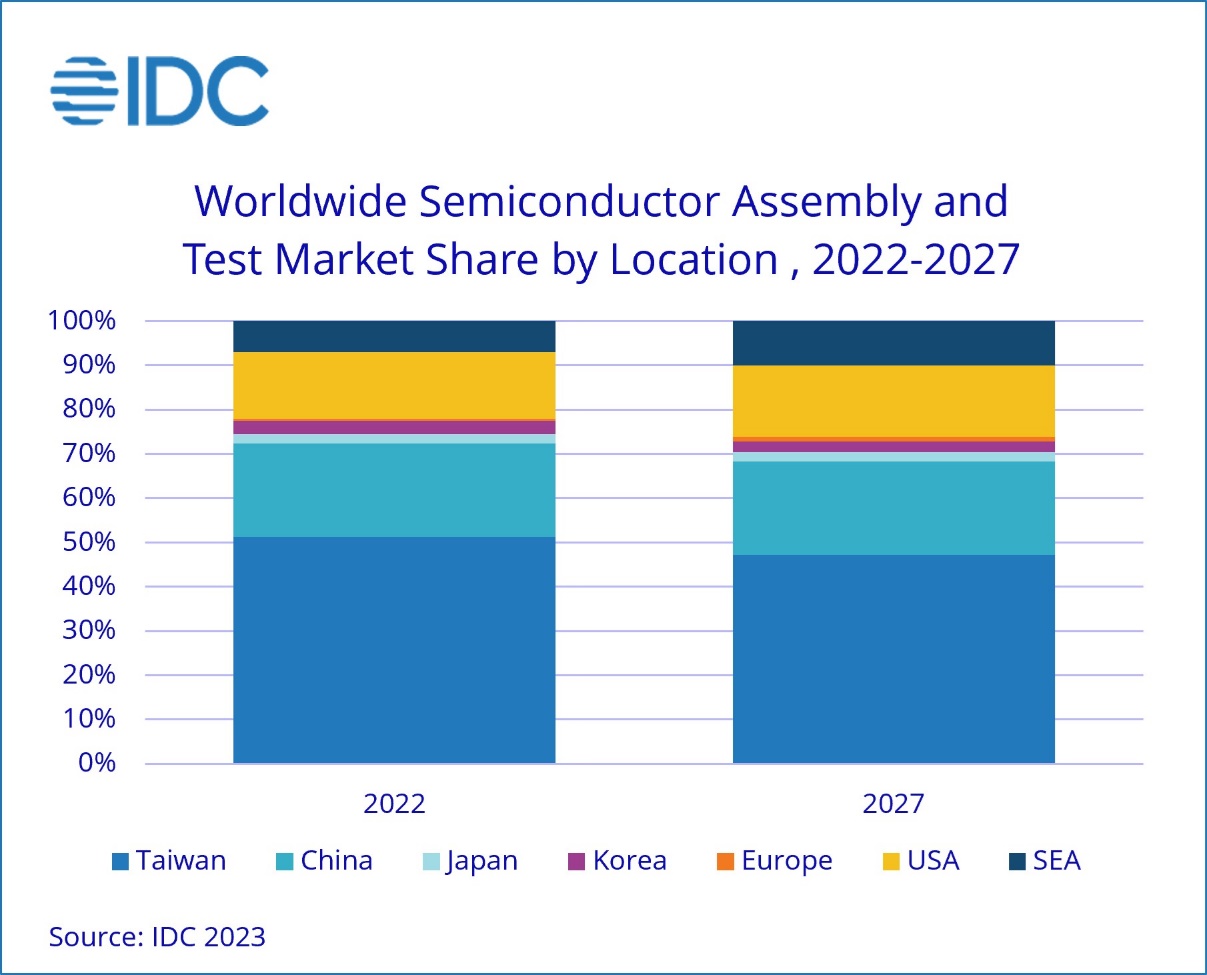
For Montage and test, IDMs have begun to invest more in the Southeast Asia market, and OSAT companies have begun to shift operations from China to Southeast Asia.
Southeast Asia is projected to play an increasingly important role in the semiconductor Montage and test market, especially in Malaysia and Vietnam.
Southeast Asia’s share of the global semiconductor Montage and test will reach 10% in 2027, while Taiwan’s share will decline to 47% in the same year from 51% in 2022.


Abonnieren für regelmäßige Marktupdates. Bleiben Sie auf dem neuesten Stand der Branchentrends, indem Sie unseren Newsletter abonnieren. Unser Newsletter ist Ihr Zugang zu erstklassiger Marktexpertise.
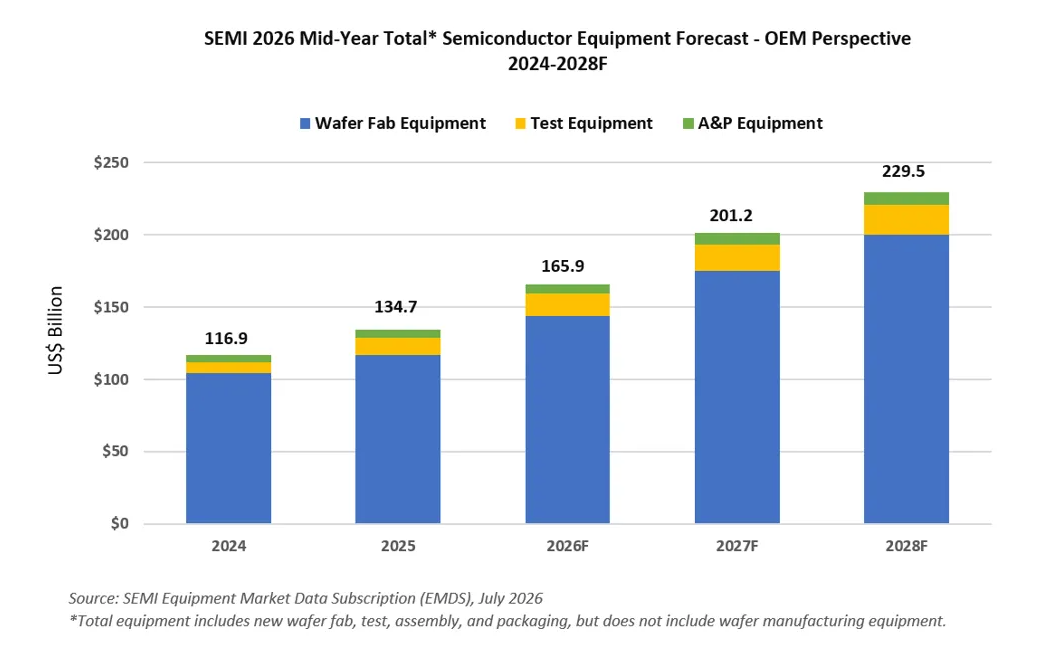


Following a record-setting year for the Halbleiterindustrie, the start of the new year has continued the momentum, as semiconductor Umsatz grew 27% in 1Q26 from 4Q25 to reach US$319bn, according t


